

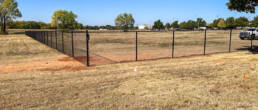
Fences take a beating in Oklahoma. Between high winds, sudden storms, and wide temperature swings throughout the year, it is normal for a fence to show some wear over time. The harder question is knowing when a small fence repair will fix the problem and when it is time to consider a full replacement. Here are seven signs worth paying attention to if you own a fence in Oklahoma City, along with what each one typically means for your next step.
1. Leaning or Wobbling Posts
Posts are the foundation of any fence, and once they start leaning or wobbling, the rest of the structure is at risk. This usually happens when a post’s concrete footing has cracked, shifted, or never been set deep enough in the first place. Wind is often the trigger, especially during Oklahoma’s stormier months, but soil movement, freeze-thaw cycles, and age can cause the same problem even on a fence that was well built originally.
What to Look For
- Posts that visibly lean, even slightly, compared to the rest of the fence line
- Movement when you push against a post by hand
- Cracked or crumbling concrete visible at the base
- Gaps forming between the post and the ground
A single loose post can sometimes be reset and re-secured without touching the rest of the fence. If multiple posts along the line are affected, it may point to a bigger issue with how the original fence was installed, such as shallow footings or undersized posts, which is worth having evaluated before deciding between repair and replacement.
2. Rotting, Warping, or Splitting Wood
Wood fences are especially prone to weather-related wear, particularly in a climate that swings between humid summers and freezing winters. Rot typically starts near the bottom of a board, where it stays in contact with moisture from soil, sprinklers, or standing water after a storm. Warping and splitting tend to show up higher on the board, caused by repeated expansion and contraction as the wood absorbs and releases moisture through the seasons. A wood fence built with quality lumber and proper spacing will resist this longer, but no wood fence is completely immune over time.
Signs Your Wood Fence Needs Attention
- Soft or spongy wood near the base of posts or boards
- Visible splits, cracks, or warping along the top or sides of boards
- Discoloration or a grayish, weathered appearance across large sections
- Boards that have pulled away from rails or fasteners
Isolated rot or a handful of damaged boards can usually be repaired by replacing individual pieces without touching the rest of the fence. Widespread rot across most of the fence line is a stronger signal that replacement will be more cost-effective than ongoing patchwork repairs, since new damage tends to appear faster than old damage can be fixed.
3. Rust and Corrosion on Metal Components
Chain link, ornamental iron, and other metal fencing hold up well over time, but they are not immune to rust, especially at welds, joints, and areas where the protective coating has worn away. Left unaddressed, rust can weaken structural components and eventually compromise the security a metal fence is meant to provide, particularly at load-bearing points like gate posts and hinges.
Where Rust Tends to Show Up First
- Bottom rails and posts that sit closer to moisture and soil
- Welded joints on ornamental iron gates and panels
- Chain link fabric where the coating has chipped or worn thin
- Hardware such as hinges, latches, and fasteners
Surface rust can often be treated, sanded, and repainted without much disruption to the rest of the fence. Deeper corrosion that has actually weakened the metal itself, causing pitting or thinning you can feel with your hand, usually means the affected section, or the fence as a whole, needs to be replaced rather than patched.
4. Storm Damage That Keeps Coming Back
Oklahoma’s storm season can be hard on fencing, and it is common for property owners to patch up wind damage year after year without addressing the underlying issue. If your fence seems to take damage every time severe weather rolls through, that pattern usually points to a fence that was not built to handle local wind loads in the first place, rather than simple bad luck. Original construction quality, particularly post depth and panel bracing, plays a much bigger role in storm resistance than most people expect.
Recurring Storm Damage Often Looks Like
- Panels that blow out or detach in moderate wind, not just severe storms
- Posts that repeatedly loosen after weather events
- Sections that have already been patched multiple times
- Damage concentrated in the same areas each season
If this sounds familiar, our post-storm fence team can evaluate whether the issue is isolated damage or a sign that the original construction needs to be rebuilt with better wind resistance in mind, so you are not facing the same repair again next storm season.
5. Sagging Gates or Gates That No Longer Latch
Gates take more daily wear than almost any other part of a fence, since they are opened, closed, and leaned on constantly. Over time, hinges loosen, frames shift, and gates begin to sag, drag on the ground, or stop latching properly. Beyond the inconvenience, a gate that will not latch can compromise security and pet containment, which matters just as much for a commercial gate as it does for a backyard one.
Common Gate Problems
- Visible sagging or dragging along the bottom of the gate
- Difficulty latching or a latch that no longer lines up
- Loose or rusted hinges
- A frame that has bent or warped out of square
Many gate issues can be corrected with hinge adjustments, frame reinforcement, or hardware replacement. If the gate frame itself has warped significantly, replacement is usually the more reliable long-term fix, especially for properties considering gate automation down the road, since automated systems rely on a properly aligned frame to function correctly.
6. Visible Gaps, Shifting, or an Uneven Fence Line

A fence line that has started to shift, bow, or develop visible gaps between panels is often one of the more overlooked signs of underlying trouble. This can happen gradually as ground settling, root growth, or repeated wind exposure pushes sections of the fence slightly out of alignment. On its own, a small gap might just need a minor adjustment, but an entire fence line that has visibly drifted usually points to a more systemic issue with the original installation.
Signs the Fence Line Itself Has Shifted
- Noticeable gaps between panels that were not there originally
- A fence line that no longer runs straight when viewed from end to end
- Sections that appear to bow outward or inward under pressure
- Increased pet or child containment issues due to new gaps
Minor shifting can often be corrected by resetting a section or two. A fence line that has drifted significantly across its full length is usually a sign that replacement will hold up better than continuing to chase individual adjustments.
7. A Fence That No Longer Matches Your Needs
Sometimes a fence is not damaged so much as it simply no longer fits how a property is being used. Families that added pets or young children may need taller or more secure fencing than what is currently in place. Homeowners who have grown tired of maintaining a wood fence may want to consider lower-maintenance options like composite fencing. Even a fence in decent condition can be worth replacing if it no longer serves its purpose, especially if the property’s use has changed significantly since the original fence went in.
Common Reasons a Fence Falls Out of Step With Your Needs
- New pets or children requiring stronger containment
- A desire for more privacy than the current fence provides
- Interest in a lower-maintenance material
- Plans to add a pool, patio, or other feature that changes fencing needs
- A property that has changed from purely residential to include a home business or rental unit
In these cases, the decision often comes down to lifestyle rather than damage, and it is worth having a conversation about what the fence actually needs to accomplish going forward.
Preventive Maintenance That Extends Fence Life
Many of the issues above can be delayed, or avoided altogether, with a bit of regular upkeep. Fences are easy to overlook once they are installed, but a short seasonal check can catch small problems long before they turn into a full repair or replacement. This is especially true in Oklahoma, where storm season and temperature swings put extra stress on every part of a fence throughout the year.
Simple Habits That Help
- Walk the fence line once or twice a year to check for leaning posts or loose hardware
- Trim vegetation and grass away from wood posts and panels to reduce moisture buildup
- Re-tighten hinges and latches before they wear enough to affect the gate frame
- Re-stain or reseal wood fencing every few years depending on sun and moisture exposure
- Address small rust spots on metal fencing before they spread to structural areas
A few minutes of routine attention is almost always less expensive than waiting until a small issue becomes a larger repair, and it can meaningfully extend the life of either a wood or metal fence.
Quick Checklist: Repair or Replace?
Here is a simple way to think through the decision:
- Isolated post or board damage: repair is usually sufficient
- Widespread rot, rust, or repeated storm damage: replacement is often the better value
- Gate issues from hardware or hinges: repair typically resolves it
- Gate frame warping or structural sagging: replacement tends to last longer
- Fence no longer fits your property’s needs: replacement is worth considering even without damage
When in doubt, an in-person evaluation is the most reliable way to know which option makes sense, since some damage that looks minor on the surface, like a slightly leaning post or a small area of surface rust, can point to a bigger issue underneath that is not visible without a closer look. A professional evaluation also helps you avoid spending money on repairs that only delay a replacement you will need anyway within a year or two.
Get a Professional Evaluation
Whether your fence needs a simple repair or a full replacement, our team has been serving Oklahoma City properties since 2008 with the same engineering-driven approach on every project, from a single post reset to a complete rebuild. We also help property owners in Edmond and Norman evaluate their fencing and decide what makes the most sense for their budget, timeline, and how the property is used. An honest assessment upfront saves you from either overpaying for an unnecessary replacement or under-investing in a repair that will not hold up through the next storm season.
If your fence is showing any of these signs, Get a Free Estimate and our team will help you determine the right path forward.
Ready to Get Started? Get a Free Estimate Today!
Whether you’re upgrading, repairing, or installing new fencing, we’re ready to help. Contact us for a free estimate and expert guidance from our trusted fence professionals.
Like this article? Spread the word!
Related Posts
Thinking About DIY Fence Installation in Yukon? Fence Concepts & Construction Explains Why You Should Skip Treated Wood
Thinking about DIY fence installation in Yukon? Fence Concepts & Construction explains…
Western Red Cedar vs. Japanese Cedar: Which Fence Boards Hold Up in Oklahoma?
Western Red Cedar or Japanese cedar? See which fence boards hold up to Oklahoma weather,…

Fence Concepts & Construction’s Guide to Oil & Gas Site Fencing in El Reno, OK
Need oil and gas site fencing in El Reno, OK? Explore materials, gates, and security…